A Conversation with Dr Biju Krishnan on Bone, Breathing and the Future Of Orthodontics
Can an adult really widen the upper jaw and change bone after the age of twenty, without surgery or brute force expansion?
Dr Biju Krishnan has spent three decades exploring that question through early interceptive orthodontics, advanced adult treatment, and a deeply collaborative approach that brings together orthodontists, osteopaths, myofunctional therapists, airway specialists, and more.
This post distils key ideas from his conversation on adult expansion, ALF therapy, home use appliances, and the wider movement toward function focused care.
Adult Bone Is Not Frozen In Time
Many people, including clinicians, still assume that once the facial bones finish growing in the late teens, they are fixed. Dr Krishnan challenges that idea.
He explains that most people picture long bones such as the femur, which form through cartilage. Those bones follow a more rigid genetic program.
Facial bones are different. Much of the upper jaw region is made from what he describes as dermal or membranous bone. This tissue develops directly from connective tissue, not from cartilage. It remodels in response to the forces and functions around it rather than following a fixed blueprint.
That difference matters in adulthood. Dermal bone continues to respond to mechanical and functional input throughout life. When forces change in a gentle, sustained way, the bone can adapt and reshape. That is the biological foundation for slow palatal expansion in adults.
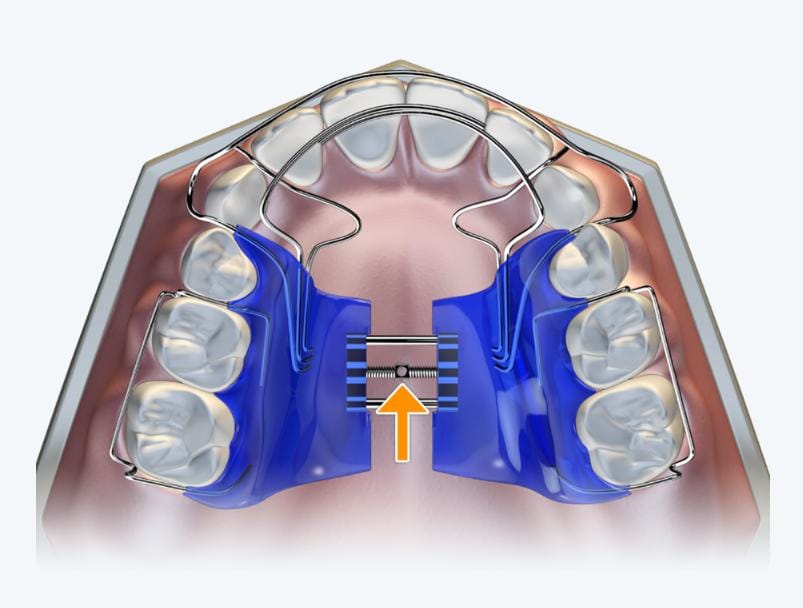
Instead of cranking an appliance to split a suture in a single dramatic movement, slow expansion aims to encourage bone remodelling along the palate and even the floor of the nose over time. The goal is meaningful, stable change, instead of a simple mechanical stretch.
Functional Matrix Theory
How Function Shapes the Face
To understand why slow expansion can be effective in adults, Dr Krishnan turns to the functional matrix theory.
He invites you to think first about the rib cage. The ribs grow around the lungs. If the lungs do not fully inflate early in life, the rib cage becomes narrow and more vertical. The bone did not grow badly by itself. It simply adapted to limited internal function.
The same principle applies to the jaws.
The most powerful functional influence on the upper jaw is the tongue. Dr Krishnan calls the tongue the organ of form for the maxilla. When the tongue rests broadly against the palate, its upward and sideways pressure helps the upper jaw grow wide and forward. The palate widens, the floor of the nose lowers, and the face can develop in a more balanced way.
When the tongue sits low in the mouth, the upper jaw tends to narrow, rise, and drift backward. Mouth breathing, poor swallowing patterns, and weak chewing amplify that collapse.
Functional matrix theory views bone as a responsive framework. It adapts to the soft tissues, pressures, and functions that surround it. That relationship does not vanish at eighteen. Adults who improve tongue posture, breathing patterns, and muscle balance, especially when guided by well-chosen appliances, can still reshape their arches and support better airway function.
Choosing An Appliance
Why The Tool Is Not the Hero
Patients often focus on the name of the appliance. They ask for ALF, Homeoblock, Biobloc, or a particular removable expander that they saw online.
Dr Krishnan takes a different view.
He has used many appliances designs over thirty years. He emphasises that the device is far less important than the thinking behind it. The central question for him is always:
Where is this patient today, structurally and functionally, why are they here and where do they need to go?
Some clinicians rely on a single favourite system and try to fit every problem into that one solution. Dr Krishnan strongly objects to this approach. In his experience, adult appliance selection should match the individual anatomy, the functional pattern, and even the sensitivity of the person’s nervous system.
For one adult, a relatively conventional removable expander might be appropriate. Another person with cranial asymmetry, long standing temporomandibular pain, and a very reactive nervous system might need something completely different.
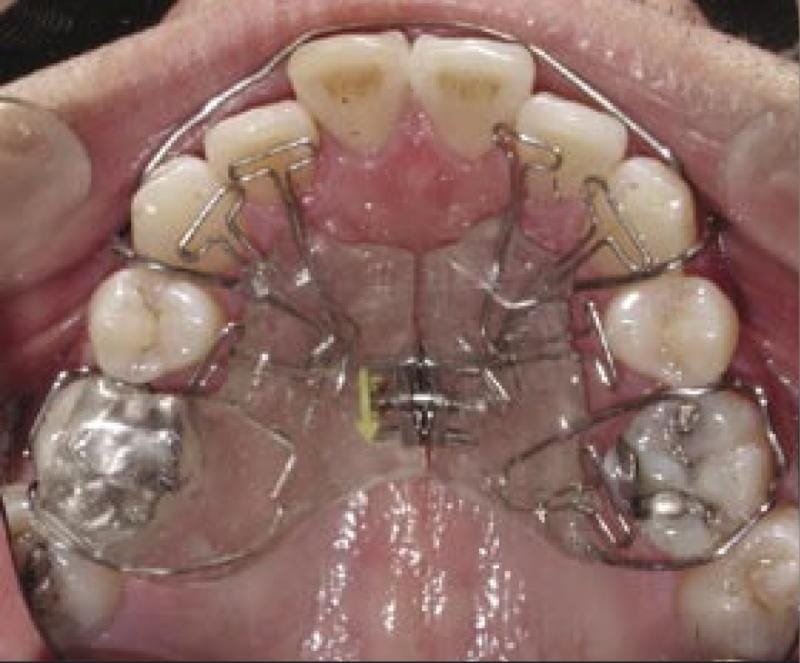
He mentions a wide range of devices that can play a role in the right hands, including options such as Homeoblock, Biobloc, Schwartz, S4 appliances, Williams type appliances, and others. Each has advantages and limitations. None provides the perfect answer.
That is why he stresses that clinicians need experience with multiple modalities and a clear diagnostic framework, rather than allegiance to a single branded device.
Why ALF Works Differently
Among the many tools he uses, Dr Krishnan often turns to ALF in patients with complex cranial patterns or neurological sensitivity.
ALF stands for Advanced Lightwire Functional appliance. It is a very thin, light wire design that looks modest compared to bulky expanders. That appearance leads many clinicians to try to use it as a gentle orthodontic expander.
Dr Krishnan calls that the biggest mistake.
ALF was developed inside an osteopathic way of thinking. Its primary purpose is not to push teeth or force the palate wider. Instead, it is designed to support better motion and balance within the entire cranio-facial system.
In many adults who present with narrow palates or retro positioned jaws, those structural issues are the visible result of deeper restrictions that often reach back to birth. The cranial bones do not move freely with each breath. Asymmetries and strains limit the way the skull can expand and recoil.
Cranial osteopaths work with that motion directly. According to Dr Krishnan, ALF amplifies and stabilises their work. By resting lightly within the dental arches, it helps re-establish more symmetrical movement and reduces internal restrictions. As the cranial system opens, the jaws can begin to develop toward a more optimal position.
The true expansion occurs secondarily, driven again by the functional matrix. Once the cranial system moves better and the tongue can live against the palate, bone remodelling follows.
That process often feels slow. The pace depends on how many restrictions exist elsewhere in the body. For some patients, though, the combination of ALF, skilled cranial work, and myofunctional therapy produces deep changes that ripple through posture, balance, and even nervous system regulation.
Temporomandibular Disorders
Why There Is No Single Splint Solution
People in pain want quick answers. Many arrive at an appointment already asking for a specific splint or appliance that they hope will fix their temporomandibular joint problems.
Dr Krishnan views temporomandibular disorders as one of the most complex areas in clinical practice. He likes to say that you must become a detective. You need to understand why this individual joint is unhappy rather than simply naming the condition and placing a splint.
He lists multiple possible drivers of pain and dysfunction.
There may be disc displacement within the joint, muscular overload, neck and upper back problems, cranial strain patterns, airway issues, parafunctional habits, emotional stress, and more. The bite, which many dentists focus on, is often a secondary symptom rather than the root cause.
For genuine joint derangements, he typically orders imaging such as an MRI scan. That allows him to see the position of the disc and the condition of the joint surfaces in motion. Only then does he decide whether the first step should be a stabilising splint, cautious expansion, ALF, or another approach.
Sometimes short term load reduction through a splint brings welcome relief. However his goal is not permanent symptom management. He wants to resolve the underlying driver of the problem. That aim demands a broader strategy than any single device can offer.
A Team Sport
The Society for Dentofacial Growth and Function
Dr Krishnan’s answer to this complexity has been to build a genuinely multidisciplinary model. He co-founded the Society for Dentofacial Growth and Function to unite professionals who share a commitment to function focused care.
The organisation brings together dentists, orthodontists, myofunctional therapists, cranial osteopaths, ear nose and throat specialists, sleep medicine clinicians, breathing educators, allergists, lactation consultants, infant feeding specialists, nutritionists, speech and language therapists, oral surgeons who focus on tongue tie release, and other aligned practitioners.
One of its key aims is the creation of a collaborative database that links these disciplines. The goal is simple and ambitious at the same time. Children should receive early, integrated support that helps their faces, jaws, and airways develop to their full potential.
The mission statement captures this clearly. The society seeks to increase paediatric health potential by promoting early screening and integrative treatment. The focus lies on fully developing the structure and function of children’s airways, faces, and jaws through coordinated care rather than isolated procedures.
Dr Krishnan’s own journey reflects this philosophy. Fate originally steered him away from his first career choice and into dentistry under the mentorship of Dr Michael Harrington. What began as a reluctant direction became a passion. Over the decades he has distilled his learning into teaching, lecturing, and writing so that more clinicians can adopt a growth and function centred approach.
Appliances, Growth, And Better Sleep for Children
The same principles that guide adult expansion also shape how Dr Krishnan and his colleagues view treatment in children.
Early interceptive appliances can guide erupting teeth, encourage wider arches, and support better muscle balance while a child still sleeps in primary or early mixed dentition. Some systems are marketed with a particular focus on sleep related breathing problems in children and offer different designs for various stages of facial development.
Other appliance families, such as those that are worn at night to guide eruption and improve oral muscle patterns, aim to harness natural growth and nocturnal function. When combined with myofunctional therapy, airway management, and good feeding patterns from infancy, they can reduce the risk that a child will grow into an adult with narrow arches, TMD, or sleep disordered breathing.
If you are a parent, you might ask yourself:
How does my child breathe at rest and during sleep?
What is their tongue doing most of the day?
Has anyone ever checked the way their face and jaws are actually growing, not just whether their teeth look straight today?
These questions sit at the heart of the movement that Dr Krishnan and his colleagues are building.
What This Means If You Are an Adult Patient
If you are an adult who struggles with crowded teeth, chronic jaw pain, snoring, or poor sleep, Dr Krishnan’s message carries several key implications.
Adult bone in the face can remodel when guided by gentle, sustained forces and improved function.
Devices such as ALF, Homeoblock, and other slow expansion appliances are tools, not magic objects. Their impact depends on the mind and method of the clinician who uses them.
Successful treatment often requires a team. A myofunctional therapist may retrain tongue posture and swallowing. A cranial osteopath may free long-standing restrictions. An airway specialist or ENT may deal with nasal blockage. A sleep medicine clinician may assess breathing during the night.
Rather than asking which single appliance you should choose, consider asking potential providers these questions.
How do you decide which appliance or protocol fits a particular adult?
Who else do you collaborate with when you treat complex cases that involve breathing or TMD?
What is your plan for improving tongue posture, nasal breathing, and overall function, not just tooth position?
Adult arch expansion after twenty is a fact. In the hands of clinicians who understand bone biology and functional matrix theory, it becomes a practical way to improve alignment and facial balance. When paired with team-based care, this approach often helps ease sleep related symptoms while working with the body rather than against it.